
Business context and challenge
New products usually lose money at first. A new listing has no reviews or ranking history, and advertising has to buy visibility. The goal was to reach profitability quickly without starving the launch of the visibility it needed.
Diagnosis and key opportunities
The launch work centred on understanding the customer and the competition: the quality and search relevance of the listing, the pain points customers care about, what competing products offered, and the creative assets needed to communicate the product clearly.
Strategy and actions
- SEO and listing quality
- Addressing customer pain points in the listing content
- Competitor analysis
- Creative assets, including Sponsored Brands Video
- PPC coverage of relevant search terms
- Inventory management to keep the launch in stock
Results
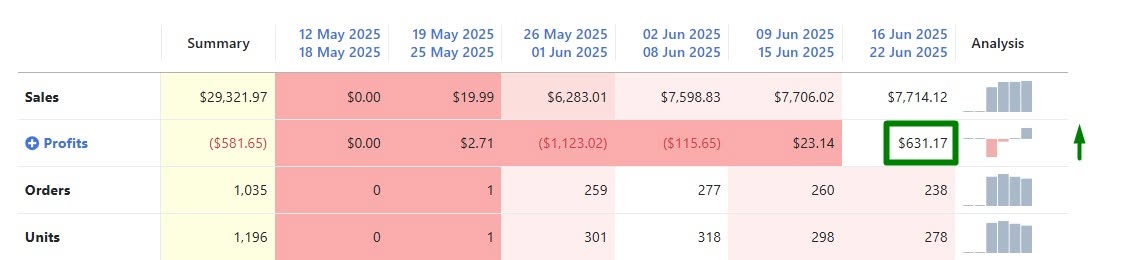
26 May – 1 June: sales $6,283.01, profit –$1,123.02
2–8 June: sales $7,598.83, profit –$115.65
9–15 June: sales $7,706.02, profit $23.14
16–22 June: sales $7,714.12, profit $631.17
Six weeks shown (12 May – 22 June): sales $29,321.97, profit –$581.65, 1,035 orders, 1,196 units
What the results indicate
Weekly results moved from a loss of $1,123.02 in the first full week of sales to a profit of $631.17 three weeks later, while weekly sales held steady at around $7,600–$7,700. On a cumulative basis the six weeks shown were not yet profitable (–$581.65), which is typical of a launch that invests early. The important signal is the trend: the product turned profitable week on week within a month of its first full week of sales.
Results reflect a specific client engagement and reporting period, as shown in the original report. Historical performance does not guarantee future results. Individual outcomes depend on brand, category, economics and execution.